What we do
Specialty Stainless Steel Processes (S³P)
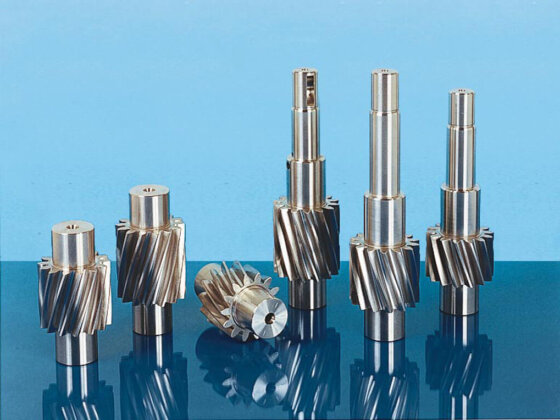
Specialty Stainless Steel Processes (S³P), including Kolsterising® and ADM, provide advanced surface hardening solutions across nickel-based and cobalt-chromium alloys, precipitation hardening (PH) metals, as well as austenitic, duplex and martensitic stainless steels – enhancing mechanical and wear performance without compromising corrosion resistance.
The ultimate protection for stainless steel.

Low temperature-based process

Microhardness

Our largest capacity

Diffusion depths up to
Key benefits of Specialty Stainless Steel Processes (S³P)
Eliminates galling, fretting and significantly reduces wear
Delivers long-lasting protection and smooth functionality under the most demanding conditions.

No dimensional change
Delivers enhanced performance without compromising precision.
Improved fatigue strength
Provides superior resistance to wear from repeated stress.

No risk of delamination
Ensures a stable, long-lasting surface with no flaking or peeling.
No loss of corrosion resistance
Corrosion performance is preserved, delivering lasting protection without trade-offs.
Our S³P treatments involve low temperature diffusion of carbon and / or nitrogen into the surface without the formation of precipitates. Tribological properties of stainless steel parts are improved by applying the S³P processes. These diffusion based processes achieve hardened stainless steel surfaces, exhibiting superior wear resistance and improved fatigue strength and galling resistance.
Due to the low treatment temperatures, the corrosion resistance, strength and ductility of the base material is maintained. The hardened surfaces do not crack or chip thus offering significant advantages over coating technologies. No foreign chemical elements that were not already present prior to the treatment are introduced during the process or added on top of the material.
S³P treatments enables Bodycote to process austenitic-, duplex-, martensitic- and precipitation hardened stainless steel alloys as well as nickel-based- and co-based materials. Please ask our specialists to determine the optimal solution for your component and application.
The premier, industry-proven innovation for hardening stainless steel – without loss of corrosion resistance – and is only available from Bodycote.
Which S³P process is right for you?
FAQs: K10 K22, K33, K Duplex
The low temperature carbon diffusion treatment is based on the proprietary Kolsterising® process. The different processes K22, K33 and K Duplex mainly differ in their diffusion depth, the proprietary physical principle is the same.
Please ask our specialists, if your material can also be treated.
Beside the chemical composition of the alloy, the results are also dependent on heat treatment and machining.
The appearance after the process is dependent on the delivery condition of the part.
The passive layer has the best properties when the microstructure of the base material is uniform. Non-uniformities like sulfides, deformation martensite and delta ferrite will reduce corrosion resistance.
Beside the chemical composition of the alloy, the results are also dependent on heat treatment and machining.
FAQs: S³P M, S³P A and S³P D
The proprietary low temperature nitrogen and/or carbon diffusion treatments are based on S³P technology. The different processes S³P M (Martensitic), S³P A (Austenitic) and S³P D (Duplex) are designed to meet the special needs of the different alloy groups.
Please ask our specialists, if your material can also be treated.
Beside the chemical composition of the alloy, the results are also dependent on heat treatment and machining.
Please send a drawing including information about heat treatment to check technical feasibility.
The passive layer has the best properties when the microstructure of the base material is uniform. Non-uniformities like sulfides, deformation martensite and delta ferrite will reduce corrosion resistance.
Interested in additional information – reach out to us
Applications
S³P processes are used for products across a wide range of markets from precision medical tools to automotive components.
Here are some links to more information about how S³P delivers superior material properties: